Choosing the Right Countertops, Cabinets, and Appliances for Your Kitchen
You have the paint chip in one hand, a cabinet door sample in the other, and three browser tabs open comparing quartz versus granite. You have been standing in your kitchen for twenty minutes trying to picture how it all comes together, and nothing is clicking. That moment of paralysis is one of the most common places where kitchen renovations go sideways before a single cabinet is removed.
The selections you make for countertops, cabinets, and appliances are not three separate decisions. They are one decision made in three stages, and when homeowners treat them independently, they end up with finishes that fight each other, appliance cutouts that do not align with cabinet dimensions, or a countertop material that cannot handle the cooking habits of the household. After working through hundreds of kitchens across Austin and Cedar Creek, we can tell you that the sequencing of these decisions matters just as much as the individual choices.
Start With Cabinets, Then Build the Rest Around Them
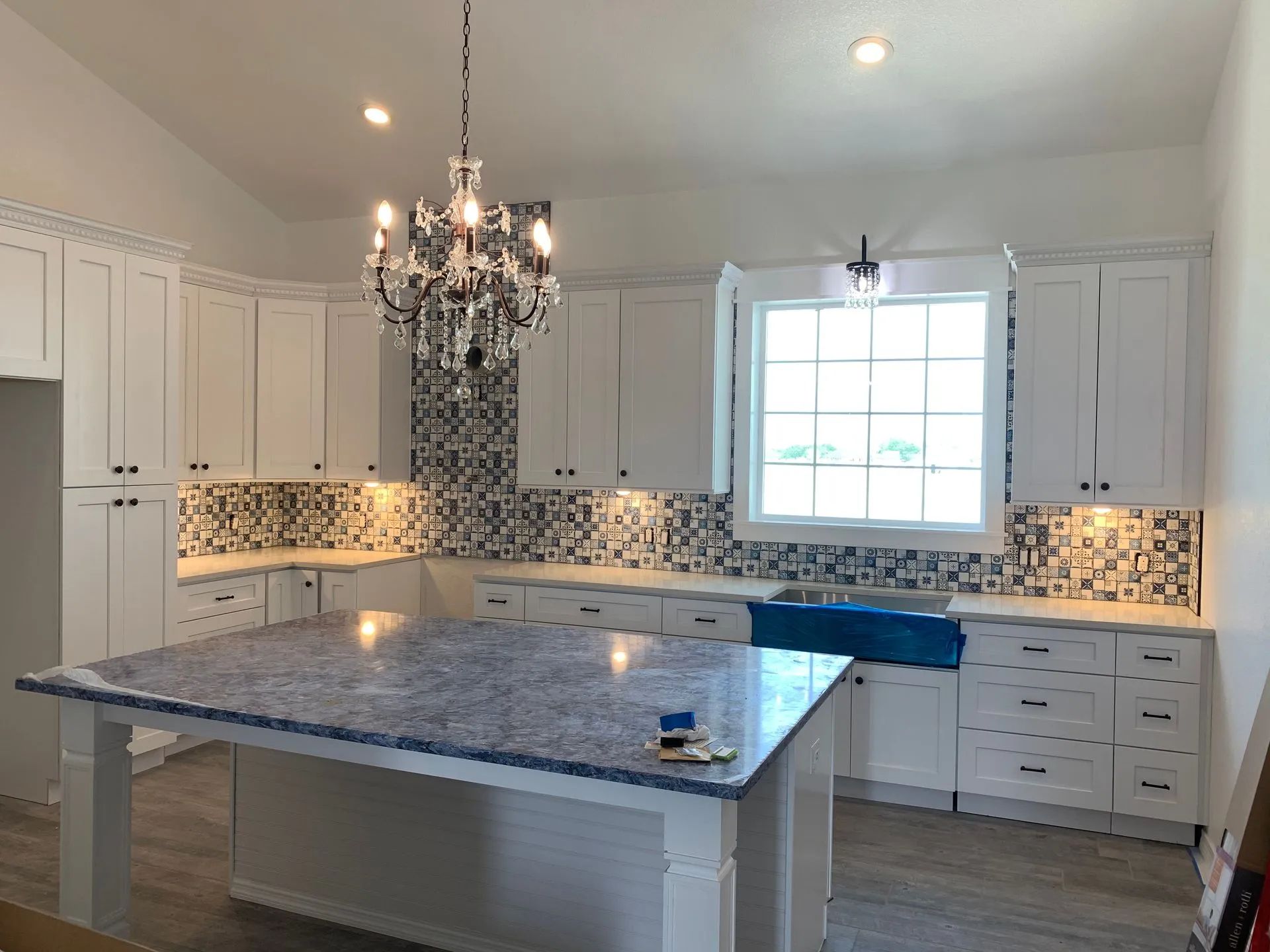
Cabinets anchor every other selection in a kitchen renovation. They occupy the most visual surface area, they determine the structural layout, and their door style sets the design register that countertops and appliances either support or undercut.
Before committing to a cabinet style, settle these three questions:
What is the door profile? Flat slab doors read contemporary and pair naturally with waterfall quartz countertops and integrated appliances. Raised panel doors carry a traditional weight that calls for edge-profiled stone and freestanding range styles.
What finish are you selecting? Painted finishes in whites and soft neutrals give you the widest flexibility downstream. Stained wood tones require more deliberate countertop coordination to avoid a heavy, dated feel.
What is your box construction? Plywood boxes hold fasteners better and resist humidity better than particleboard, which matters in Austin kitchens where humidity swings between dry summers and wet spring months can cause particleboard to swell at the toe kicks and base frames over time.
Cabinet lead times run 6 to 14 weeks for semi-custom and 16 to 20 weeks for fully custom lines. Lock your cabinet order before finalizing appliance specs, because appliance cutout dimensions drive cabinet opening sizes.
Countertop Selection: Material Performance Over Aesthetics Alone
| Surface Material | Heat Resistance | Scratch Resistance | Maintenance Level | Best Use Case |
|---|---|---|---|---|
| Quartz (engineered) | Moderate (use trivets) | High | Low | High traffic family kitchens |
| Granite | High | High | Medium (annual sealing) | Heavy cooking households |
| Quartzite | High | High | Medium (sealing required) | Design-forward, active kitchens |
| Butcher Block | Low | Low | High (oiling required) | Prep islands, baking zones |
| Porcelain Slab | Very High | High | Low | Outdoor kitchens, heat-heavy setups |
| Laminate | Low | Low | Low | Budget renovations, rentals |
In Austin, granite and quartzite hold up particularly well because the temperature differential between an air-conditioned kitchen and a hot outdoor grill area creates thermal cycling that weaker materials handle poorly. Quartz is the single most requested countertop material we see, but it carries one real limitation: prolonged direct heat above 150 degrees Fahrenheit causes the resin binders to discolor, which is a failure mode that voids most manufacturer warranties.
Slab thickness matters beyond aesthetics. A 3cm slab on a perimeter run adds structural rigidity that matters on spans over 24 inches without cabinet support underneath. If your island run exceeds 36 inches without a supporting cabinet column below, confirm with your fabricator that the slab grade and thickness support that span.
TIP: Bring your cabinet door sample to the stone yard in person. Phone photos flatten undertones in both the cabinet finish and the stone veining. What reads as warm beige on screen often reveals a green or pink undertone under warehouse lighting that clashes with a warm white cabinet.
Appliance Specs Drive More Decisions Than Most Homeowners Expect
Most homeowners shop appliances by brand and finish first. Professionals sequence it differently: start with the range or cooktop because that unit determines hood sizing, cabinet height above the cooking surface, and in many cases the gas line or dedicated circuit requirements that affect rough-in work.
Range vs. Cooktop and Wall Oven
A 36-inch range requires a 42-inch minimum hood for adequate capture velocity. A 30-inch range typically pairs with a 30 or 36-inch hood. In Cedar Creek kitchens with open floor plans and vaulted ceilings, hood sizing errors result in smoke migration across the entire living area because there is no defined ceiling plane to contain it.
Wall oven and cooktop combinations give you more ergonomic flexibility and can simplify cabinet layout, but they add a second dedicated electrical circuit and increase your total appliance spend by roughly 20 to 35 percent compared to a comparable freestanding range.
Refrigerator Depth and Cabinet Alignment
Counter-depth refrigerators (typically 24 to 25 inches deep) align flush with standard 24-inch base cabinets and create a cleaner visual line. Standard-depth units (30 to 34 inches) protrude past the cabinet face, which disrupts the layout visually but provides 20 to 30 percent more interior volume. If your household goes through a full grocery run twice per week, the volume difference is a practical consideration that outweighs the aesthetic argument.
WARNING:
If your kitchen renovation involves relocating a gas line for a new range position, do not proceed without a licensed plumber pulling the appropriate permit in Travis County. Gas line work that bypasses permitting creates a liability issue on resale and may affect your homeowner's insurance coverage on a claim.
How These Three Selections Work Together: A Coordination Checklist
Before finalizing any purchase order, confirm the following:
- Cabinet opening widths match appliance cutout specs, including the dishwasher and refrigerator
- Hood depth and cabinet depth above the range are coordinated (minimum 18-inch clearance from cooking surface to combustible cabinet bottom per standard residential code)
- Countertop edge profile does not conflict with appliance door swing clearance on corner placements
- Undermount sink cutout is confirmed with the countertop fabricator before cabinet installation, not after
- Pull handle styles on appliances and cabinet hardware share a finish family (mixing brushed nickel and polished chrome reads as an oversight, not a design choice)
Maintenance by Material: What to Expect Long-Term
Granite requires resealing every 12 to 18 months in kitchens with heavy oil and acid exposure. A simple water bead test tells you when the seal has broken down: pour a tablespoon of water on the surface and if it absorbs within 4 minutes rather than beading, the seal is gone.
Painted cabinets in high-humidity kitchens near Austin's spring season require a semi-gloss or satin finish minimum. Flat paint traps moisture at door edges and develops a tacky surface within 18 to 24 months in kitchens with frequent cooking steam.
Stainless appliances in households with hard water, which is common across Cedar Creek and much of the Austin metro, benefit from a monthly wipe-down with a mineral deposit remover. Hard water spotting etches the oxide layer on stainless over time and creates permanent clouding that no surface cleaner resolves.
Frequently Asked Questions
Should I choose countertops or cabinets first?
Choose cabinets first. Cabinet style, finish, and door profile establish the design direction that countertop material and veining should follow. Selecting a countertop without a confirmed cabinet finish creates a coordination problem that often forces one selection to be reconsidered. Cabinet lead times also exceed countertop fabrication windows.
What countertop material holds up best in a busy kitchen?
Quartz and quartzite handle daily abuse well, but they perform differently. Quartz resists staining and requires no sealing but cannot handle sustained direct heat. Quartzite is a natural stone that handles heat well but needs annual sealing. For households that cook frequently at high heat, quartzite or granite outperforms quartz over a 10-year period.
How do I know if my appliance will fit the existing cabinet opening?
Measure the rough opening width, height, and depth before purchasing. Appliance spec sheets list cutout requirements, not just exterior dimensions. A 30-inch range, for example, may require a 30.25-inch minimum opening. Confirm those figures against your actual cabinet opening and note whether you have wiggle room for a slight shimming adjustment.
Is it worth spending more on semi-custom cabinets versus stock?
For most kitchens, semi-custom cabinets offer the best value. Stock cabinets limit you to fixed sizes in 3-inch increments, which creates filler gaps in corners and against walls. Semi-custom cabinets are built to the nearest inch and offer interior organization upgrades that stock lines do not. The functional improvement usually justifies the added investment on kitchens over 120 square feet.
What is the most common coordination mistake in kitchen renovations?
Ordering appliances before confirming hood clearance and cabinet opening dimensions. This single sequencing error accounts for a significant share of mid-project change orders. Always have appliance spec sheets in hand before cabinetry is ordered, and cross-reference every cutout dimension with your cabinet drawings before placing either order.
Experienced Contractors Who Get Every Kitchen Detail Right
Getting countertops, cabinets, and appliances to work as a cohesive system is the core challenge of any
kitchen renovation, and in the Austin area, local factors like humidity swings, hard water, and the shift between indoor and outdoor cooking environments make material selection more consequential than national guides suggest. Red Knights Construction LLC
serves homeowners across Austin and Cedar Creek, Texas, with 10
years of field experience coordinating kitchen renovations from layout planning through final installation. If your selections are already in progress or you are starting from scratch, we can walk through the coordination sequence with you and help you avoid the change orders that derail most projects.